Mobile App Regulations in UAE: How to Ensure Your App is TDRA Compliant
262 Views 9 min June 15, 2026

With over 20+ years of experience in driving global digital initiatives, Nikhil Bansal is the CEO & Director of Apptunix. He specializes in orchestrating large-scale digital transformations, enterprise-grade software solutions, and high-level business strategies that redefine industry standards. Nikhil is known for his ability to bridge the gap between complex business challenges and innovative technology, helping Fortune 500 companies and startups alike achieve sustainable growth. A visionary leader, he empowers enterprises to navigate the digital landscape with agile, ROI-focused models and future-ready business strategies.
The fintech ecosystem is expanding rapidly in Saudi Arabia, but conventional BNPL models often conflict with Islamic finance principles.
Today, fintech startups and financial institutions are exploring BNPL platforms as demand for Sharia-compliant digital payment grows.
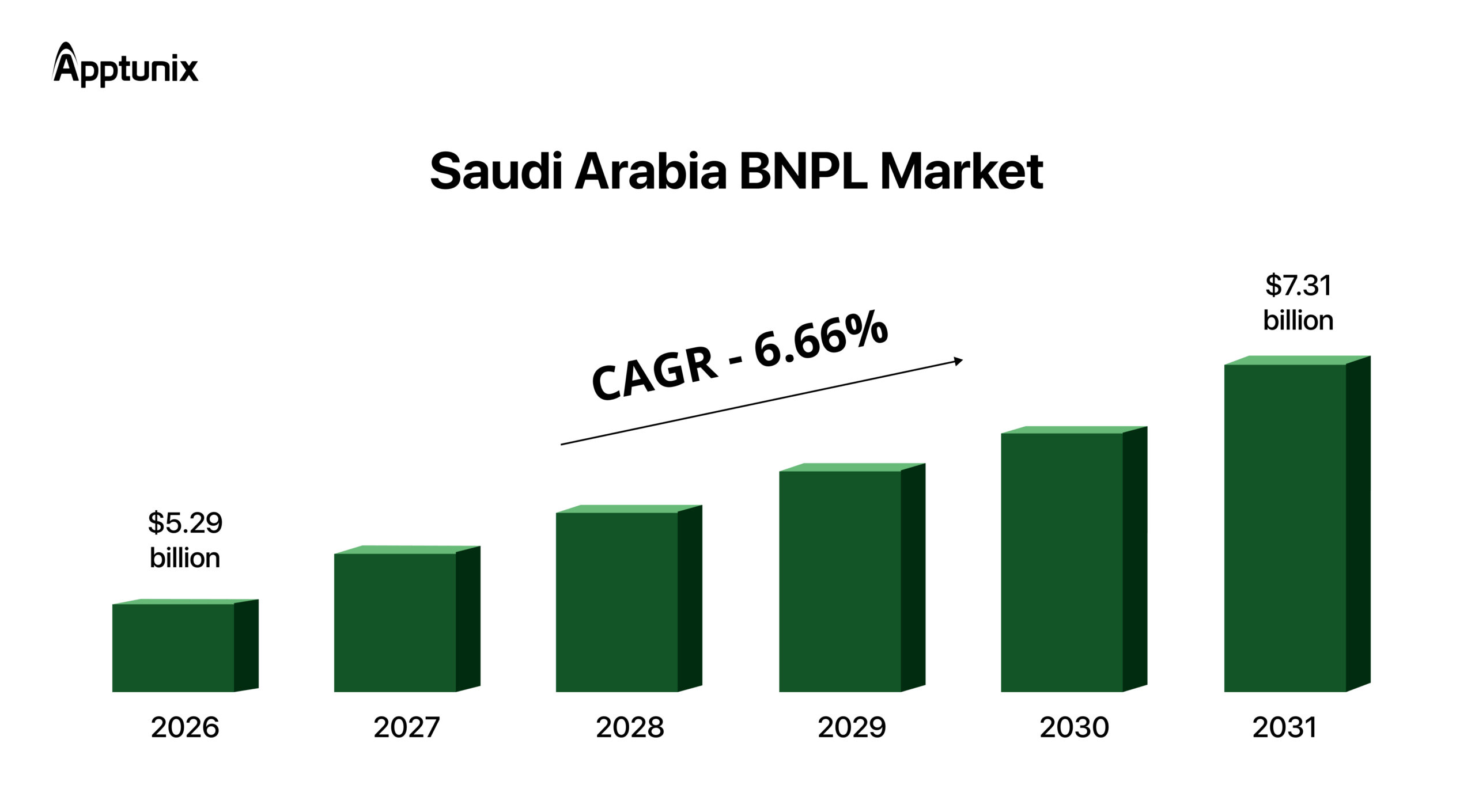
In fact, Modor Intelligence stated that KSA’s BNPL market stands at $5.29 billion in 2026 and is expected to reach $7.31 billion by 2031. This highlights the growing demand for flexible and digitally accessible financing solutions.
From fintech and BNPL-first companies to banks and other financial institutions, businesses seek BNPL solutions that align with both customer expectations and regulatory requirements.
However, identifying the opportunity is only the first step. Before investing in such a platform, businesses must understand the process involved in Sharia-compliant BNPL app development in Saudi Arabia.
They require more than technical expertise, like a deep understanding of Sharia principles, compliance frameworks, and the fintech landscape.
If you’re one of them and looking to invest in BNPL app development services, you’re at the right place. This blog has everything you need to know for creating a Sharia-compliant BNPL app solution.
So let’s dive into it!

The market for Sharia-compliant BNPL is gaining popularity as one of the most attractive markets, mainly because of the rapidly growing fintech ecosystem, the rise in e-commerce, and the preference for Islamic financial products.
Additionally, the Saudi Vision 2030 programmes are driving digital transformation, and regulators are promoting innovation in financial services.
Meanwhile, consumers these days are looking for options that align with their Islamic values and offer flexible payment methods. This opens up huge business prospects for companies looking to invest in a Sharia-compliant BNPL app.
But the key enablers of the Sharia-compliant BNPL market are:
A buy now pay later platform is deemed to be Sharia-compliant if it adheres to the principles of Islamic finance and avoids any practices that are prohibited under Sharia law.
BNPL apps based on Sharia compliance are not similar to traditional BNPL solutions, which come with payment fines and interest payments. These applications are built on transparency and principles of ethical finance, and they do not engage in any activities that are prohibited under Sharia.
The Following Factors Make BNPL apps Sharia-compliant:
By adhering to these principles, businesses can provide their customers with flexible financing solutions that align with their expectations and Islamic financial principles.
Follow a strategic approach that balances Islamic finance principles, regulatory compliance, and technology while developing a BNPL app. Understand all the valid steps, from validating the business model to ensuring compliance with regulations before investing in it.
Highly expert BNPL app developers follow the right development approach in KSA, which includes
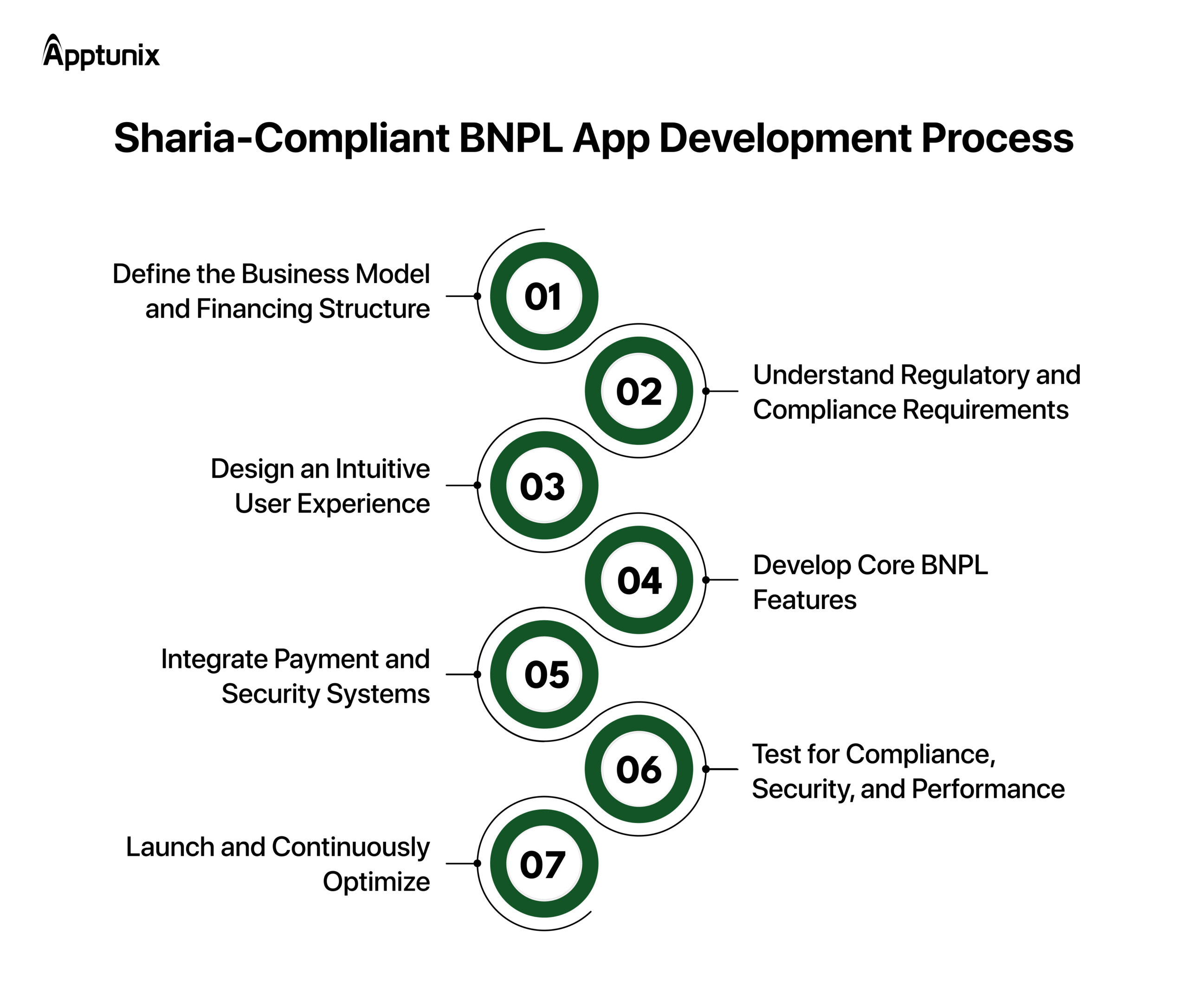
1:Define the Business Model and Financing StructureIn the initial phase, identify how your BNPL platform will operate. Define your target audience, revenue streams, and merchant partnerships.
Choosing a Sharia-compliant financial model like Murabaha and deferred payment arrangements is also critical.
Moreover, establish a clear financing structure to ensure regulatory compliance and create a transparent payment experience for users and merchants.
2:Understand Regulatory and Compliance RequirementsOnce you’re done with defining the business model and financing structure, ensure the platform aligns with PDPL requirements, SAMA regulations, and KYC/AML standards.
It is crucial to understand regulatory and compliance requirements before starting development. When you do early compliance planning, it will help you avoid costly revisions later.
Overall, this phase will help you build trust among users, regulatory authorities, and partners from the very beginning.
3:Design an Intuitive User ExperienceDesigning an intuitive user experience is the first actual development process after defining the business model and regulatory requirements.
In this phase, the UI/UX team creates a user-friendly interface of the application that simplifies onboarding, financial approvals, payment tracking, and installment management.
Crafting a well-designed interface improves usability and helps users better understand repayment schedules and financing terms. Providing a seamless experience is crucial for customer adoption, retention, and ultimately the app’s success.
4:Develop Core BNPL FeaturesOnce the BNPL-compliant BNPL app design is complete, leading app developers start building the essential functionalities. The features that are considered first include
Integrating these features creates the foundation of the application and ensures smooth day-to-day operations. This is the development phase where developers also focus on the app’s performance, interactions, scalability, merchants, and payment systems.
It ultimately delivers a reliable experience to users.
5:Integrate Payment and Security SystemsIn this phase, the development team incorporates systems that ensure seamless payment and a secure system. They integrate factors like
This helps in protecting financial transactions and customer data. However, beyond protecting transactions, these systems help BNPL providers meet regulatory requirements and maintain customer trust.
6:Test for Compliance, Security, and PerformanceIn this step, the Sharia-compliant financing app undergoes rigorous testing to ensure the system handles transactions securely, meets regulatory requirements, and delivers a reliable user experience. The testing process includes
These are all for identifying and removing potential issues before launching the application. Testing helps BNPL businesses ensure a secure, stable, and compliant platform for end users and merchants.
7:Launch and Continuously OptimizeAfter the QA team ensures the testing success, the app becomes ready to launch. The team helps in launching the application, monitoring user behavior, gathering feedback, and tracking compliance updates.
Apart from that, integrating new features to improve performance and support business growth is also a part of optimization.
Remember, maintenance ensures the application remains competitive, adapts to customer needs, and keeps pace with regulatory changes.
Developing a BNPL app while focusing on sharia compliance delivers more than flexible payment options. Sharia-compliant financing apps offer a more secure, transparent, and user-friendly experience while ensuring compliance with Saudi regulations and Islamic finance principles.
However, an app becomes successful when the features run smoothly, solve issues, and give a good user experience. Let’s find out the key features that must be incorporated while BNPL app development in 2026:
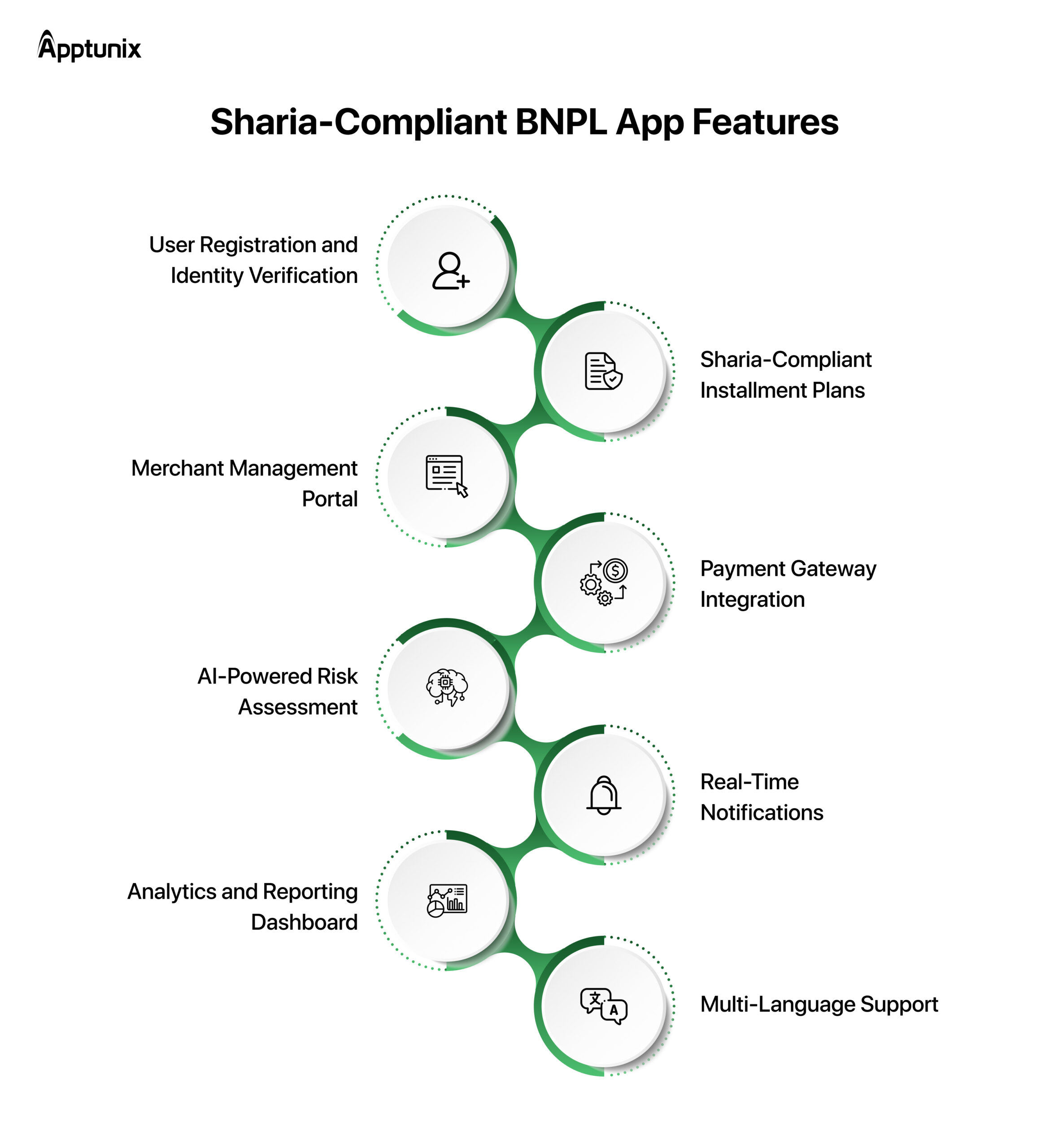
Allow customers to sign up securely through KYC processes, biometric authentication, and mobile number verification.
From repayment schedules to financing terms, this feature enables users to check payment obligations without interest and hidden charges.
Offers tools to merchants so that they can manage transactions, track repayments, monitor customer financing, and access business insights.
Support seamless and secure payment processing through trusted banking and payment networks.
Integrating AI in risk assessment means the use of alternative data and behavioral analytics to evaluate user eligibility and reduce financing risks.
Enable the application to notify users about transactions, payment due dates, approvals, and account activity.
Analytics features provide actionable insights into transaction volume, repayment trends, platform performance, and, of course, customer behavior.
Support both Arabic and English to provide a seamless experience for users across Saudi Arabia.
So these are the core features that must be considered while investing in BNPL or Islamic fintech app development. Now, discover how such platforms are making money.
Earlier BNPL platforms relied on interest-based earnings; however, modern Sharia-compliant apps generate revenue through multiple sources. The ethical and transparent business model that aligns with Islamic finance principles is the reason behind this.
By ensuring compliance with Sharia guidelines, the models that allow businesses to monetize their platforms are as follows:
1:Merchant CommissionsMerchant fees are the most common and core revenue streams of a BNPL platform. In this model, merchants pay a commission to the BNPL platform for every successful transaction completed through the application. This helps them increase sales and improve customer conversion rates.
For example:
2:Service and Administrative FeesA Sharia-compliant financing or BNPL provider charges fixed service fees for facilitating transactions, processing payments, and maintaining the platform. These fees are not like interest-based charges but are disclosed upfront and remain transparent throughout the financing period.
Through this model, BNPL providers recover operational costs while focusing on Islamic finance principles.
A BNPL app, for example, charges a fixed or one-time administrative fee of SAR 20 for a SAR 1000 transaction.
3:Subscription Plans for MerchantsBNPL apps also offer premium subscription packages that provide merchants with customer insights, advanced analytics, reporting tools, and additional business management features.
Subscription plans are good for merchants because they help them better understand their customers' behavior, optimize marketing efforts, and monitor sales performance, helping them make better decisions.
4:BNPL-as-a-Service (BaaS)BaaS is also one of the leading models that some BNPL providers generate money with. They make money by offering their BNPL infrastructure to retailers, financial institutions, and marketplaces that want to launch financing services under their own brand.
This enables businesses to quickly introduce BNPL services without investing in developing a financing platform from scratch.
5:Value-Added ServicesBNPL apps also generate revenue from value-added services like risk assessment tools, fraud monitoring, payment processing support, and merchant-focused financial solutions.
Businesses can develop a sustainable BNPL ecosystem by combining these revenue models. This helps in maintaining transparency and compliance with Sharia requirements.
Well, asking how much BNPL and Islamic fintech app development costs is the most common question businesses ask before entering this market. The answer depends on several factors, like compliance requirements, the app’s complexity, and security standards.
For example, a basic/MVP (minimum viable product) BNPL app costs less than building a highly complex BNPL app with advanced features and integration.
So as of 2026, the cost of developing a Sharia-compliant BNPL app in Saudi Arabia is SAR 100,000 to SAR 600,000. Analyze the table to understand the pricing based on complexity.
Indeed, Sharia-compliant BNPL app development in KSA involves more than integrating features and payment workflows.
As a business owner, you must ensure that your company complies with the country’s financial, security, and data protection laws before entering the market.
Below are the major requirements that you must follow to develop a sharia-compliant BNPL app. Ignoring these requirements can lead to operational challenges, regulatory penalties, and delays in product launch.
The regulatory considerations include:
The Saudi Central Bank established guidelines that a BNPL provider must comply with. SAMA’s regulations are designed to promote responsible lending practices, consumer protection, and financial stability.
As a BNPL provider, you must implement KYC (Know Your Customer) and AML (Anti-Money Laundering) procedures to prevent fraud and financial crimes in KSA. These procedures basically include customer due diligence, identity verification, and transaction monitoring.
KSA’s PDPL compliance, which stands for Personal Data Protection Law, governs how businesses collect, process, store, and share user data. Under this compliance, BNPL platforms should focus on prioritizing user consent, data security, and privacy management to remain compliant.
Creating Sharia-compliant financing software requires strong cybersecurity measures because these platforms handle sensitive financial data. A fully-secured BNPL software comes with features like multi-factor authentication, data encryption, and fraud detection systems, which protect both users and businesses.
One of the regulatory requirements BNPL providers follow in Saudi Arabia is maintaining transparency to build and maintain compliance with consumer protection standards. Under this framework, all financing terms, applicable fees, and repayment schedules must be communicated to users.
You have understood SAMA regulations and other regulatory requirements. Now, it's time to examine the steps to build a Sharia-Compliant BNPL app in KSA.
Before wrapping up this detailed guide on building a Sharia-compliant financing app, let’s understand its future trends.
Islamic fintech app development is rapidly reshaping the BNPL market in KSA, as consumer expectations, regulatory requirements, and financial technologies continue to advance. Businesses need to keep an eye on emerging trends that are ready to influence the future of Sharia-compliant BNPL app development in Saudi Arabia.
Here are the top 5 trends that are going to shape the future of Islamic BNPL:
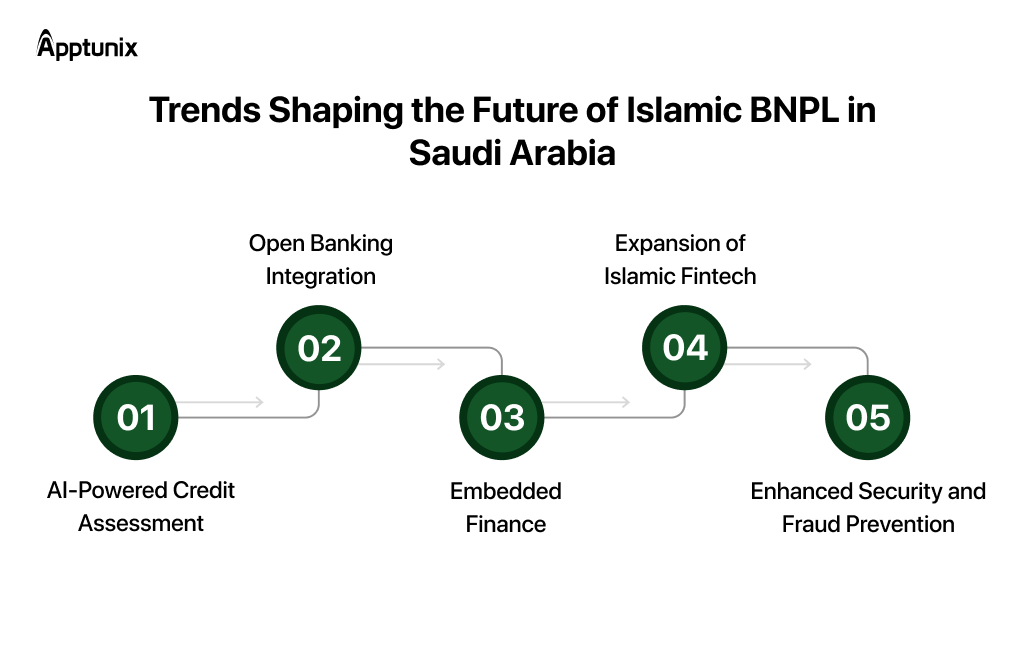
1:AI-Powered Credit AssessmentIn 2026 and beyond, buy-now-pay-later service providers are willing to increase the use of advanced AI and alternative data sources. All these to assess creditworthiness, reduce risk, and improve financing decisions without relying solely on traditional credit scores.
2:Open Banking IntegrationBNPL applications continue to gain access to secure financial data as open banking adoption grows in Saudi Arabia. This will help streamline customer onboarding and enhance risk evaluation.
3:Embedded FinanceNumerous retailers and digital platforms have already started or will surely be integrating financing options directly into the customer journey. This will make BNPL services more accessible at the point of purchase.
4:Expansion of Islamic FintechIslamic fintech growth is also one of the big trends in sharia-compliant BNPL app development in Saudi Arabia. Businesses will continue investing in innovative fintech products that align with Islamic finance principles as the high demand for interest-free financial solutions increases.
5:Enhanced Security and Fraud PreventionSecurity has been an essential part of creating BNPL apps with the rise in digital transactions. Fraud prevention will be a priority by integrating advanced security technologies, real-time monitoring, and fraud detection systems to protect users and maintain trust.
It’s a fact that the demand for Sharia-compliant BNPL platforms in KSA is no longer emerging but is growing rapidly. Today, customers are looking for more flexible and ethical ways to manage payments, which is making businesses enter a market that sits at the intersection of fintech innovation and Islamic finance.
However, building a Sharia-compliant BNPL app is not that easy; you have to balance everything, from compliance and security to user convenience and the right development approach.
Most importantly, you must choose a reliable partner that has experience in building successful BNPL apps in Saudi Arabia. With the right technology partner and strategy, you can launch a BNPL solution that is not only market-ready but also developed for long-term growth.
A partner like Apptunix, a leading mobile app development company in Saudi Arabia, is crucial to transform your ambitious fintech ideas into scalable digital products.
So what are you waiting for? Partner with Apptunix and build a scalable fintech app that drives growth and success.
Q 1.How to build a BNPL platform?
The process for Sharia-compliant BNPL app development in Saudi Arabia includes defining a business model, understanding compliance requirements, designing an intuitive user experience, developing core BNPL features, and testing for compliance and security. Then, launching and optimizing the platform.
Q 2.How much does BNPL app development cost in KSA?
The cost of developing a BNPL application in Saudi Arabia ranges from SAR 100,000 to SAR 600,000 or even more, depending on the project’s complexity, compliance requirements, third-party integrations, security, and scalability of the solution.
Q 3.How long does it take to develop a Sharia-compliant BNPL app in KSA?
Creating a Sharia-compliant BNPL takes 3-9 months or even longer. A BNPL app with basic features takes up to 3 months; however, a complex BNPL app with highly advanced features can take 6-9 months or even longer. The timeline depends on project complexity, feature requirements, and developers’ expertise.
Q 4.How do Sharia-compliant BNPL Apps Make Money?
A sharia-compliant BNPL app in Saudi Arabia has several revenue streams, which include merchant commissions, service and administrative fees, BNPL-as-a-Service (BaaS), and subscription plans for merchants.
Get the weekly updates on the newest brand stories, business models and technology right in your inbox.
With over 20+ years of experience in driving global digital initiatives, Nikhil Bansal is the CEO & Director of Apptunix. He specializes in orchestrating large-scale digital transformations, enterprise-grade software solutions, and high-level business strategies that redefine industry standards. Nikhil is known for his ability to bridge the gap between complex business challenges and innovative technology, helping Fortune 500 companies and startups alike achieve sustainable growth. A visionary leader, he empowers enterprises to navigate the digital landscape with agile, ROI-focused models and future-ready business strategies.
262 Views 9 min June 15, 2026
315 Views 9 min March 6, 2026

360 Views 9 min March 6, 2026